

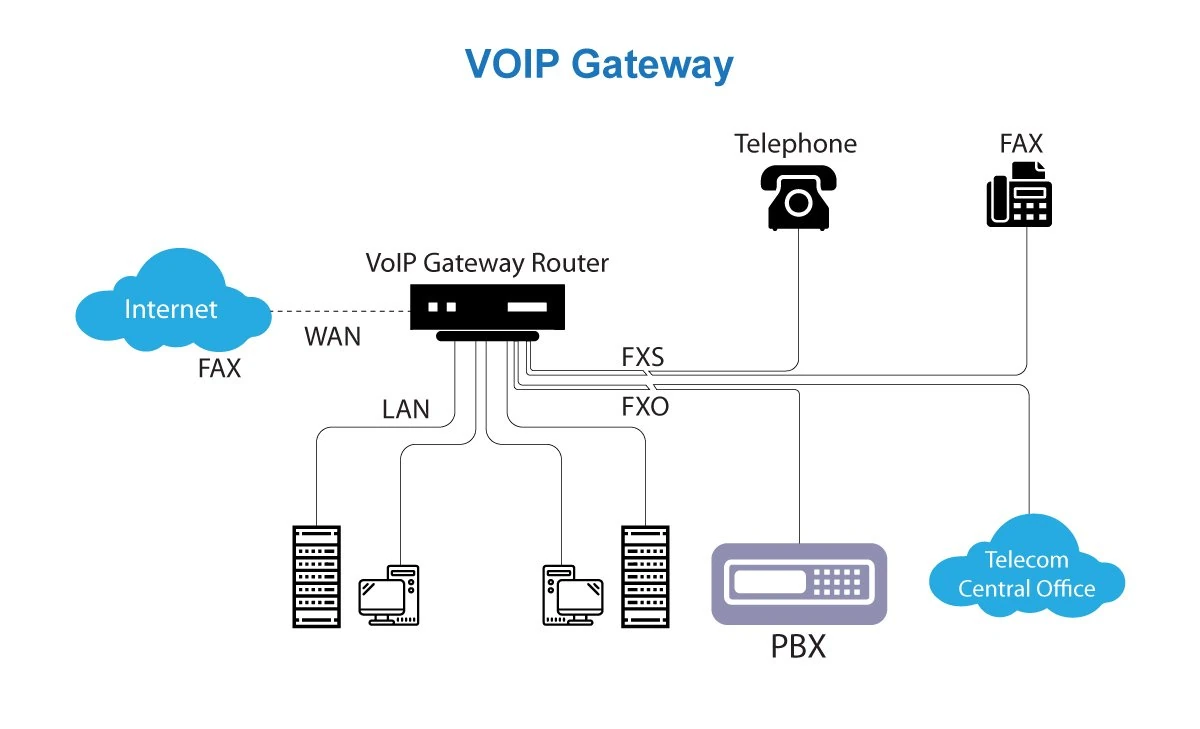
VoIP Gateway Security: How to Safeguard Your Communications
As businesses continue to embrace Business VoIP solutions, the importance of securing VoIP gateways has never been more critical. VoIP gateways act as a bridge between traditional telephony systems and modern VoIP networks, making them a crucial part of any communication infrastructure. However, their central role also makes them a potential target for cyberattacks. Ensuring...
Treat the SIP boundary as part of the network design
A Session Border Controller sits between voice networks and helps administrators apply consistent controls to SIP sessions. Begin with a diagram of the trusted and untrusted networks, the SIP trunks that cross them, and the systems that need to communicate. Define which traffic is expected and restrict access to those known paths rather than exposing voice services broadly.
Review authentication, encryption options, address and port rules, administrative access, and software maintenance as part of the deployment. Requirements depend on the organization’s topology and policies, so have the network and security teams verify the final design instead of relying on a default configuration.
Monitor, document, and review
Useful operational visibility includes registration status, call setup failures, resource usage, and changes to routing or access rules. Retain only the logs needed for troubleshooting and applicable business requirements, and ensure access to them is controlled.
Security and compliance are ongoing responsibilities. Assign owners for updates, configuration backups, incident escalation, and periodic access reviews. Test any change in a controlled window, and confirm that the safeguards do not interrupt legitimate calls or emergency procedures.
Choose a gateway that fits the network
A successful communication deployment depends on matching the technology to real-world call flows, existing systems, and the people who support them. Use these points as a starting checklist:
- Inventory legacy interfaces such as analog, GSM, and E1/T1 before comparing models.
- Match port and concurrent-call capacity to current demand and planned growth.
- Confirm SIP interoperability, routing options, security controls, and local support.
Test the proposed setup with representative traffic and document the final configuration before rollout. A staged deployment makes it easier to confirm call quality, interoperability, and recovery procedures while keeping existing services available.

Dinstar Distributor in India | Official Master Distributor – Dinstar India
In today’s rapidly evolving digital communication landscape, VoIP (Voice over Internet Protocol) has become a critical technology for businesses and organizations seeking efficient...
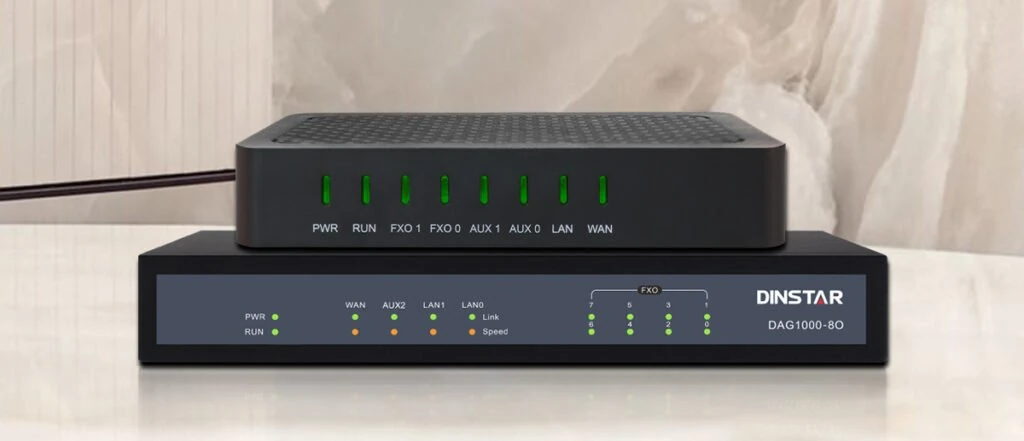
Advantages of FXS VoIP Gateway and FXO VoIP Gateway | Dinstar India
In today’s fast-evolving communication landscape, businesses increasingly rely on advanced technologies to maintain efficient, cost-effective, and reliable communication systems. Among...